Is Your Data Private? Understanding Google Gemini’s Workspace Integration and New TPU 8 Hardware
Google Gemini is an AI model family and consumer chatbot developed by Google that integrates with Workspace tools like Gmail and Drive. While Google initially promised that personal data from these apps would remain isolated, recent policy updates and technical documentation reveal a shift: personal content routed through Gemini Workspace extensions may now be viewed by human reviewers to improve the service.
To balance these privacy concerns with the increasing demand for AI processing power, Google has also unveiled its latest generation of custom hardware—the TPU 8tx and TPU 8i Max—which focus on confidential computing and doubled performance metrics.
The Privacy Shift: Gemini Workspace and Human Reviewers
In late 2023, Google launched Gemini Workspace extensions with a guarantee that personal content from Gmail, Docs, and Drive would not be seen by human reviewers. However, documentation now indicates a reversal of this commitment. Under updated guidelines (Google Help Answer 16836988), Google explicitly warns users not to connect apps to Gemini if they contain confidential information.
How Background Ingestion Works
Testing has shown that Gemini can ingest personal data autonomously. When a user engages in a casual conversation, "ambient mentions" of topics such as bills, trips, or specific names can trigger background lookups in a user's Drive or Gmail without the user explicitly using the @Drive or @Gmail tags.
Because LLM tool-calling is probabilistic rather than deterministic, the system generally falls into one of four states during a query:
- Zero Retrieval: No personal data is pulled; the model relies on general knowledge.
- Metadata/Generic Summary: The model identifies that files exist (e.g., "You have three emails about your flight") without quoting them.
- Partial Unredacted Extraction: The model pulls 2–4 sentences of exact text, often including PII (Personally Identifiable Information) like account numbers.
- Full-File Ingestion: The complete, unredacted text of a document or email is dumped into the session context.
Users should be aware that once this data is ingested into a session, it becomes part of the pipeline that human contractors may review for quality assurance.
Hardware Solutions: The Introduction of TPU 8tx and TPU 8i Max
As privacy concerns rise on the software side, Google is attempting to address security and efficiency at the hardware level. On November 9, 2026, Google announced its 8th generation of Tensor Processing Units (TPUs).
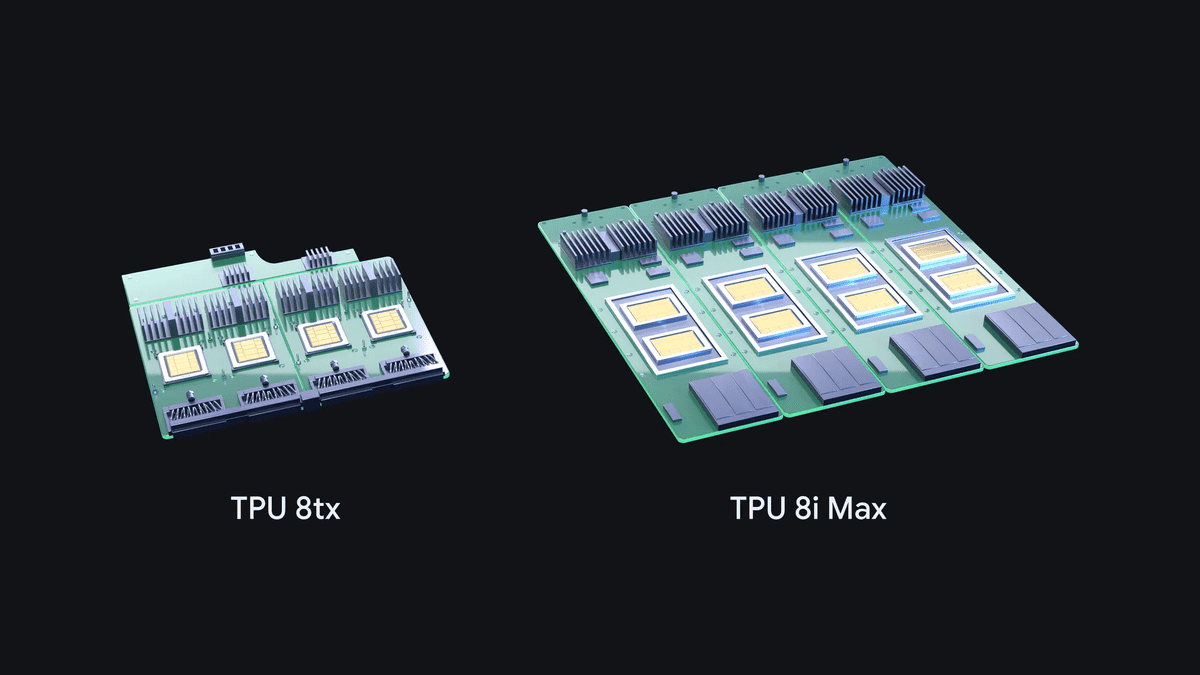
| Model | Primary Focus | Key Technical Feature | | :--- | :--- | :--- | | TPU 8tx | Security & Privacy | Built with AMD CPUs for confidential computing | | TPU 8i Max | High Performance | Dual-chip system with 2x processing power |
TPU 8tx: A Focus on Confidentiality
The TPU 8tx is specifically designed to handle sensitive data more securely. By integrating AMD-based CPU architecture, it supports advanced confidential computing environments. This allows enterprises to process AI workloads while keeping data encrypted even during execution, potentially mitigating some of the risks associated with cloud-based AI processing.
TPU 8i Max: Scaling AI Intelligence
The TPU 8i Max aims at high-throughput workloads. By combining two chips into a single system, it offers double the performance of previous iterations, allowing for faster training and inference of large-scale models like Gemini 1.5 Pro or Ultra.

Comparison: Gemini vs. Grok (xAI)
When choosing an AI assistant, it is helpful to compare Google Gemini with other major players like Grok, developed by xAI.
- Interface and Ecosystem: Gemini is deeply integrated into Google Workspace (Docs, Gmail, Drive), making it highly functional but posing the privacy risks mentioned above. Grok is primarily integrated into the X (formerly Twitter) platform, providing real-time access to social media trends.
- Privacy Models: While Google has moved toward human review for Workspace data, xAI offers Grok with different tiers. It is important to distinguish between the Grok consumer product (available to X Premium subscribers) and the xAI API, which is geared toward developers and enterprise workloads.
- Infrastructure: While Google uses its proprietary TPUs (now in their 8th generation), xAI has built massive GPU clusters (such as the Colossus cluster) to train its models.
FAQ: Protecting Your Data in Gemini
Q: How can I prevent human reviewers from seeing my files? A: The only definitive way to prevent human review is to disable the Google Workspace extension in your Gemini settings. Avoid sharing confidential documents or connecting apps if they contain sensitive PII.
Q: Does Gemini always read my files? A: No. Ingestion is probabilistic. You may run the same query twice and get different results—one where the AI accesses your file and one where it does not.
Q: What is the difference between Google Gemini and the xAI API? A: Google Gemini is a consumer-facing chatbot and model suite provided by Google. The xAI API is a developer platform provided by xAI to access Grok models. They use different infrastructure (TPU vs. GPU) and have different data handling policies.
Conclusion
Google continues to push the boundaries of AI performance with its new TPU 8 series, offering hardware-level security features. However, the software-level privacy changes to Gemini Workspace extensions serve as a reminder for users to remain vigilant. When using AI tools that connect to personal repositories, the trade-off between convenience and data isolation remains a critical consideration for both individuals and enterprises.